Agentic AI: Productivity Leap or Expensive Trend?
Uber burned its 2026 AI budget by April; Microsoft cut Claude Code seats. Yet the gains are real. Is agentic coding a leap or an expensive trend?
Two facts from the first half of 2026, side by side.
Fact one: Uber rolled Claude Code out to thousands of engineers and exhausted its entire 2026 AI budget by April. Around the same time, Microsoft began cancelling most internal Claude Code licenses, winding down access in one division by June 30.
Fact two: Gartner reports 90% of engineering leaders see productivity improvements from agentic coding, with a net average gain of 19.3%. The enterprise AI coding-agent market is running at roughly $9.8–11 billion annualized.
So which is it—a genuine productivity leap, or an expensive trend that budgets can't survive? The honest answer is both at once, and the difference between the two outcomes is almost entirely governance. Let me make the cost-benefit case plainly.
(This is the cost-benefit companion to my earlier agentic AI: pilot to production post, which covers the engineering. Here we're asking: is it worth the money?)
Why Agentic Coding Is So Expensive
A chat with an AI is one question, one answer. An agent is a loop: plan, act, observe, retry, verify—often across many files, many tool calls, many model invocations per single task. That structural difference shows up brutally on the invoice.
- Agentic coding tasks average 1–3.5 million tokens per task, including retries.
- That's on the order of 1,000× the tokens of a simple code-chat interaction.
- Counterintuitively, input tokens drive most of the cost—the agent re-reads context, files, and prior steps constantly.
This is the trap that snared the headline cases. Seat-based mental models ("we bought 5,000 licenses") collide with token-based reality (each seat consumes wildly variable amounts). At Uber, monthly cost ran $150–250 per engineer on average—and $500–2,000 for heavy users. Multiply the heavy-user figure across an enthusiastic org and you get a budget gone by April.
The infamous $500M-in-a-month incident was the same disease in its terminal form: agents deployed with no usage caps. (I cover that pattern in depth in When AI Spend Becomes Waste.)
Why It's Also a Genuine Leap
If it were only expensive, this would be a short post. But the productivity is real and measurable:
- Agents don't just autocomplete—they plan tasks, edit across repositories, run tests, and open pull requests with far less hand-holding than the autocomplete tools of 2024.
- They run work in parallel and in the background, compressing wall-clock time on multi-step tasks.
- The 19.3% net gain isn't a vendor claim—it's leaders measuring their own teams.
The capability is not the question. The question is whether you capture that value at a cost that makes sense—or pay for the capability and let the value leak out the side. That's exactly the perceived-vs-real productivity problem: the gain is real, but so is the bill, and only disciplined measurement tells you which is bigger.
The Cost-Benefit Verdict
Here's the framing that resolves the contradiction:
Agentic AI is a productivity leap for organizations with an operating model for it, and an expensive trend for organizations without one. Same tool. Opposite outcomes.
The reporting is unusually consistent on this: enterprises that adopt agents without a clear operating model "risk higher costs without proportional value." The losers in early 2026 weren't using worse agents than the winners. They were using the same agents with no caps, no routing, no measurement, and a seat-based budget that never anticipated token-based consumption.
How to Land on the "Leap" Side
The good news is the levers are well understood. Five of them turn agentic AI from a budget risk into a return.
1. Route models by task difficulty
The single biggest lever. Sending simple tasks to cheap models and reserving frontier models for hard ones cuts costs 60–90%. Most agent steps don't need your most expensive model. Cursor's own tiers illustrate the spread—its Composer 2 Standard ($0.50/$2.50 per M tokens) does the same work as the Fast variant ($1.50/$7.50) at higher latency. Pay for speed only where speed matters.
2. Cap consumption by default
Per-engineer and per-workflow budget limits with hard cutoffs. The $500M month and the Uber overrun share one root cause: no ceiling. A ceiling is one config change away and would have prevented both.
3. Measure value, not just usage
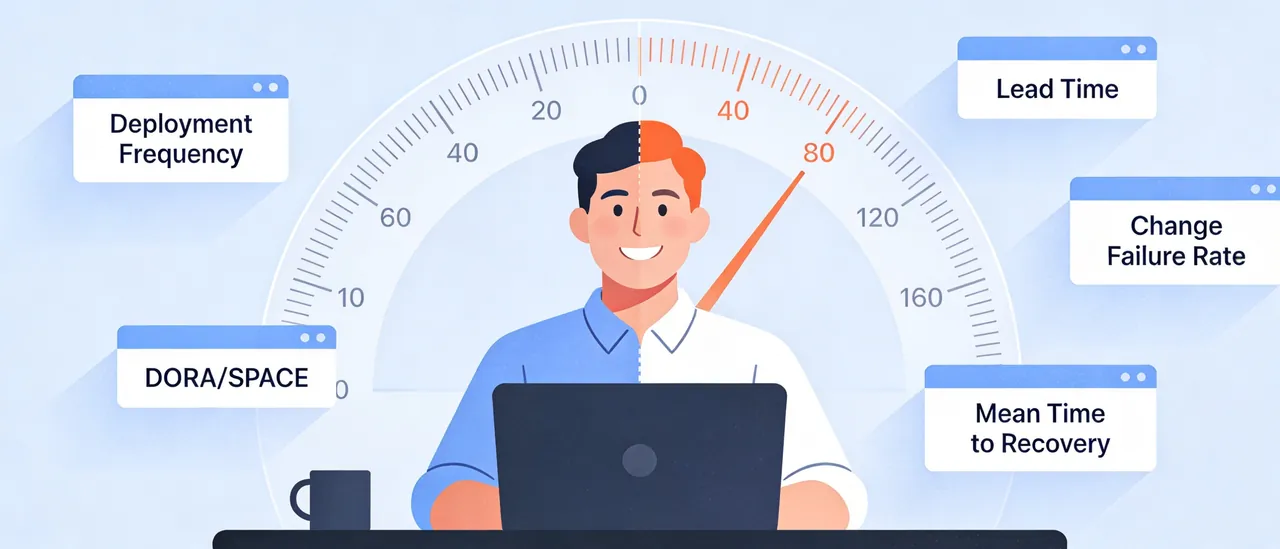
"Engineers are using it a lot" is not ROI. Tie agent spend to DORA-style outcomes—lead time, throughput, change failure rate. Some executives in 2026 found it "difficult to connect increased AI use to new consumer features." That's a measurement failure, and it's as fatal to ROI as a billing failure.
4. Match agents to the right tasks
Agents shine on well-scoped, verifiable work—test generation, multi-file refactors, bug fixes with clear acceptance criteria. Point them at vague, sprawling problems and they burn millions of tokens producing plausible nonsense. Scope tightly.
5. Cache aggressively
Since input tokens dominate agentic cost, caching repeated context is not optional—it's the difference between a workflow that pays for itself and one that doesn't.
A Simple Decision Test
Before scaling agentic AI across a team, you should be able to answer yes to all five:
- Do we have per-user and per-workflow spend caps with hard cutoffs?
- Are we routing trivial tasks to cheap models automatically?
- Can we tie agent spend to a delivery outcome we actually care about?
- Have we scoped which task types agents handle (and which they don't)?
- Is caching on for repeated context?
If any answer is no, you're not ready to scale—you're ready to repeat Uber's April. Pilot small, instrument heavily, fix the no, then scale.
The Bottom Line
Agentic AI in software engineering is not an expensive trend. But it will behave like one for any organization that deploys it without governance.
- The productivity is real: ~19% net gains, genuine multi-step autonomy, parallel execution.
- The cost is real and brutal: 1,000× the tokens of chat, $500–2,000/month for heavy users, budgets exhaustible in a quarter.
- The deciding variable is your operating model, not the tool: routing, caps, measurement, scoping, caching.
The companies that figured this out are getting a leap. The ones that didn't are getting a cautionary tale and a cancelled contract. The technology has already proven itself. What's still being tested is organizational discipline—and that's the part you control.
Sources:
- Gartner, Enterprise AI Coding Agent Market guide (2026)
- Reporting on Uber, Microsoft, and enterprise Claude Code cost (Fortune and others, May 2026)
- How Do AI Agents Spend Your Money? Analyzing Token Consumption in Agentic Coding Tasks (arXiv, 2026)
- Vantage, agentic coding cost analysis (2026)
Related Reading:
Enjoying this article?
Get posts like this in your inbox. No spam, unsubscribe anytime.