Agentic AI in 2026: From Pilot to Production
Why 2025's agentic AI pilots failed, what's different now, and how to build production-ready AI agents that survive real enterprise workloads.
The hype around AI agents in 2024 was deafening. The reality in 2025 was sobering—most pilots failed to reach production. But 2026 is different. According to Gartner, 40% of enterprise apps will feature task-specific AI agents by year's end, up from less than 5% in 2025. IDC predicts 40% of Global 2000 job roles will involve working with AI agents. The question isn't whether agentic AI will transform work—it's whether your organization will be ready.
The State of Agentic AI: Reality Check
Current Adoption
| Stage | Percentage | Notes |
|---|---|---|
| Actively exploring | 30% | Research and vendor evaluation |
| Piloting | 38% | POCs and limited trials |
| In production | 11% | Actual deployed systems |
| No plans | 21% | Waiting for maturity |
Why 2025's Agent Pilots Failed
1. Reliability Wasn't Production-Grade
Early agents failed unpredictably:
- Hallucinated actions: Agents confidently executed incorrect steps
- Brittle to edge cases: Any unexpected input caused failures
- No graceful degradation: Errors cascaded without recovery
The bar for production: 99.9%+ reliability on defined tasks. Most 2025 pilots achieved 85-90%.
2. Observability Was an Afterthought
Organizations couldn't answer basic questions:
- What did the agent actually do?
- Why did it make that decision?
- Where did it fail and why?
Without observability, debugging was guesswork, trust was impossible, and compliance was a nightmare.
3. Governance Frameworks Didn't Exist
- Who approves what agents can do?
- How are permissions scoped?
- What's the audit trail?
- Who's liable when things go wrong?
Most organizations attempted to bolt governance onto existing IT frameworks—unsuccessfully.
4. Cost Surprised Everyone
Agentic workflows consume significantly more tokens than single-shot prompts:
- Planning steps: Multiple LLM calls
- Tool execution: API calls, retries
- Verification loops: Checking outputs
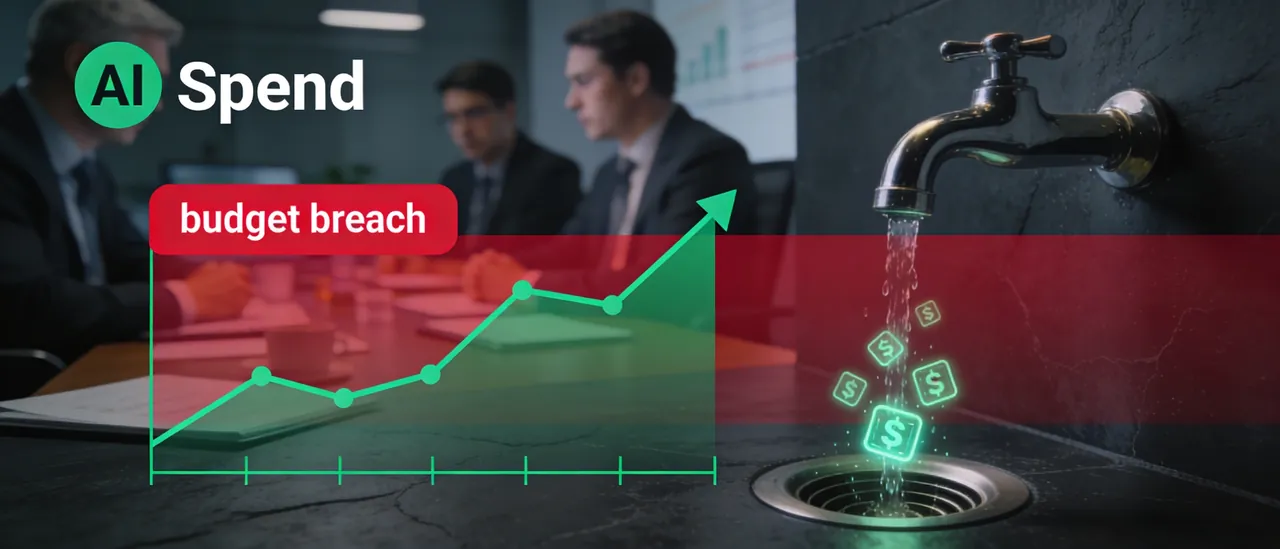
Pilots that worked at $100/day cost $10,000/day at scale. (By mid-2026 this had become the defining enterprise AI story—Uber exhausted its full-year AI budget by April, and one firm reportedly burned $500M in a month on uncapped usage. See Agentic AI: Leap or Expensive Trend? and building a cost-governance framework.)
What's Different in 2026
1. Frameworks Have Matured
The tooling landscape has evolved:
| Framework | Strength | Best For |
|---|---|---|
| LangGraph | Graph-based workflows | Complex, stateful agents |
| AutoGen | Multi-agent orchestration | Collaborative agent systems |
| CrewAI | Role-based agents | Team-oriented tasks |
| Claude Computer Use | Desktop automation | UI-based workflows |
| OpenAI Assistants | Managed infrastructure | Simple deployment |
2. Reliability Techniques Have Emerged
Structured outputs eliminate parsing errors:
# Instead of hoping for valid JSON
response = client.chat.complete(
    response_format={#a5d6ff">"type": "json_schema", "schema": action_schema}
)
Tool use constraints prevent rogue actions:
- Allowlists of permitted tools
- Parameter validation before execution
- Human-in-the-loop for sensitive operations
Retry and recovery patterns handle failures gracefully:
- Exponential backoff
- Alternative action paths
- Graceful degradation to human handoff
3. Observability Is Built-In
Modern agent frameworks include:
- Trace logging: Every LLM call, tool use, and decision
- Cost tracking: Per-action and per-workflow totals
- Latency monitoring: Identify bottlenecks
- Quality metrics: Success rates, user satisfaction
Tools like LangSmith, Weights & Biases, and Arize make this accessible.
4. Governance Patterns Have Crystallized
Best practices now exist:
| Governance Area | Pattern |
|---|---|
| Permissions | Scoped API keys per agent/workflow |
| Approvals | Tiered: auto-approve low-risk, human-approve high-risk |
| Audit | Immutable logs with action attribution |
| Rollback | Version-controlled agent configurations |
The Production Architecture
Multi-Agent Orchestration
Production systems rarely use single agents. The pattern:
Orchestrator Agent
├── Planning Agent (breaks down tasks)
├── Execution Agents (specialized workers)
│   ├── Data Agent (database queries)
│   ├── API Agent (external integrations)
│   └── Document Agent (file operations)
├── Verification Agent (checks outputs)
└── Escalation Agent (human handoff)
The "Agent OS" Concept
Enterprises are building Agent Operating Systems:
- Registry: Catalog of available agents and capabilities
- Scheduler: Prioritization and resource allocation
- Router: Matching tasks to appropriate agents
- Monitor: Observability and alerting
- Governance: Permissions and compliance
This infrastructure is as important as the agents themselves.
Real Production Use Cases
Customer Service Automation
Before: Chatbots handling 30% of queries
After: Agents resolving 80% end-to-end
Example workflow:
- Understand customer intent
- Access order/account information (tool use)
- Take action (refund, reschedule, update)
- Confirm with customer
- Log resolution
Key metrics: 40+ minutes saved per interaction (Telus case study)
Software Development Assistance
Before: Code completion suggestions
After: Autonomous bug fixes and feature implementation
Example workflow:
- Parse issue/requirement
- Locate relevant code (codebase search)
- Generate fix/implementation
- Run tests
- Create pull request
- Respond to review feedback
Key metrics: 40-60% faster for well-defined tasks. Tools like Claude Code are already demonstrating this pattern in production.
Data Analysis and Reporting
Before: Analysts write queries, generate reports
After: Agents handle routine analysis autonomously
Example workflow:
- Understand business question
- Identify relevant data sources
- Write and execute queries
- Generate visualizations
- Summarize insights
- Deliver formatted report
Key metrics: 95% reduction in query time (Suzano case study)
Implementation Roadmap
Phase 1: Foundation (Month 1-2)
Choose your framework:
- Simple workflows → OpenAI Assistants, Claude Tools
- Complex orchestration → LangGraph, AutoGen
Build observability first:
- Implement tracing before building agents
- Establish cost baselines
- Define success metrics
Start with low-risk use cases:
- Internal tools
- Supervised automation
- Non-critical workflows
Phase 2: Pilot (Month 2-4)
Scope tightly:
- One well-defined workflow
- Clear success criteria
- Specific user group
Iterate on reliability:
- Track failure modes
- Implement recovery patterns
- Build test suites
Measure everything:
- Task completion rate
- Time saved
- Cost per task
- User satisfaction
Phase 3: Production (Month 4-6)
Harden for scale:
- Load testing
- Failover handling
- Cost optimization
Implement governance:
- Approval workflows
- Audit logging
- Compliance documentation
Plan for evolution:
- Version management
- A/B testing capability
- Continuous improvement process
Common Pitfalls and How to Avoid Them
Pitfall 1: Over-Automating Too Fast
Symptom: Agents handling tasks they shouldn't
Solution: Start with human-in-the-loop, gradually reduce supervision
Pitfall 2: Ignoring Edge Cases
Symptom: Agents fail on 10% of real-world inputs
Solution: Extensive testing with production data, graceful fallbacks
Pitfall 3: Underestimating Costs
Symptom: Budget overruns at scale
Solution: Cost modeling before launch, per-task budgets, caching strategies
Pitfall 4: No Exit Strategy
Symptom: Users can't complete tasks when agents fail
Solution: Always maintain human path, clear escalation triggers
The Skills You Need
For Teams Building Agents
| Skill | Importance | How to Develop |
|---|---|---|
| Prompt engineering | Critical | Practice, iteration, frameworks |
| Systems design | High | Understanding distributed systems |
| Observability | High | Logging, monitoring, tracing tools |
| Security mindset | Critical | Threat modeling, least privilege |
| Domain expertise | High | Understanding the actual workflow |
For Teams Working With Agents
| Skill | Importance | How to Develop |
|---|---|---|
| Agent supervision | Critical | Understanding capabilities and limits |
| Exception handling | High | Knowing when/how to intervene |
| Feedback provision | High | Improving agent performance over time |
| Prompt refinement | Medium | Adjusting instructions for better results |
2026 Predictions
What Will Work
- Task-specific agents: Narrow, well-defined, reliable
- Supervised automation: Human oversight with agent execution
- Internal tools: Lower risk, higher tolerance for errors
- Augmentation over replacement: Agents assisting humans, not replacing
What Will Struggle
- Fully autonomous customer-facing agents: Trust isn't there yet
- General-purpose agents: Jack of all trades, master of none
- Agents without observability: Ungovernable at scale
- Bolt-on agentic features: Integration matters more than capability
Conclusion
Agentic AI in 2026 is real, but it's not magic. The 40% of enterprise apps featuring agents by year-end will share common traits:
- Narrow scope: Well-defined tasks with clear boundaries
- Production-grade reliability: 99%+ success on target workflows
- Full observability: Every action logged and traceable
- Thoughtful governance: Clear permissions, approvals, and audit trails
- Human in the loop: Escalation paths when agents can't perform
The organizations succeeding with agentic AI aren't those with the most advanced models—they're those with the most disciplined approach to production engineering.
The agent revolution is here. The question is whether you'll build the foundation to capture its value.
Sources:
- Gartner Predictions 2026
- Google Cloud AI Business Trends Report
- Deloitte Tech Trends 2026
- Enterprise case studies (Telus, Suzano, Toyota)
Related Reading:
Enjoying this article?
Get posts like this in your inbox. No spam, unsubscribe anytime.