When AI Spend Becomes Waste: A Cost-Governance Framework
Enterprises will spend $665B on AI in 2026, yet 73% can't prove a return. A practical governance framework to stop experiments becoming budget leaks.
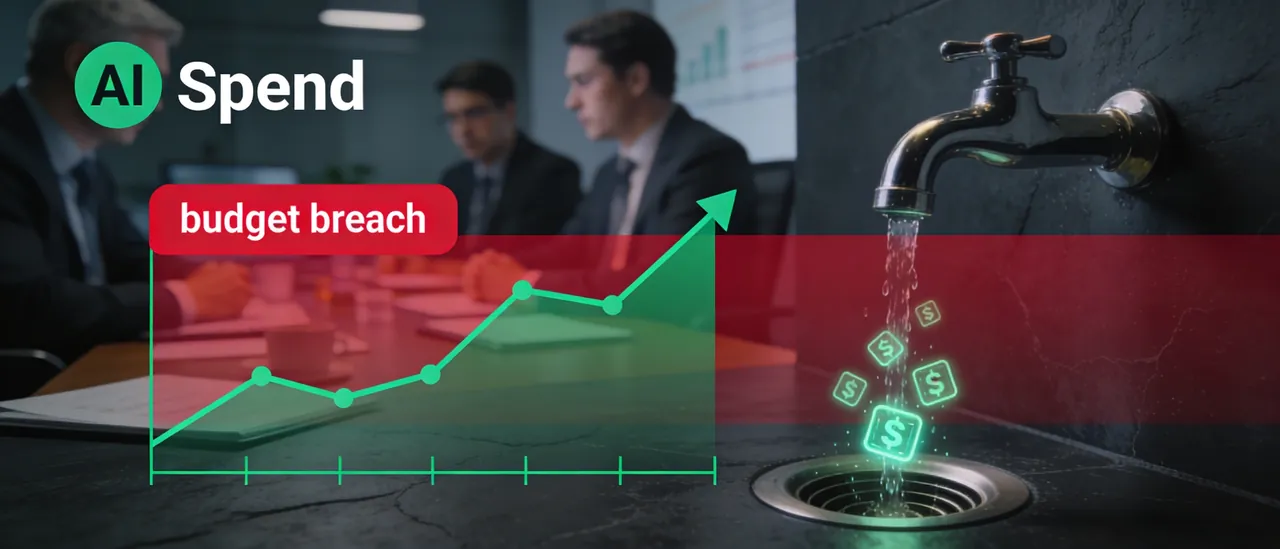
A company reportedly spent $500 million in a single month on AI because nobody set a usage limit. That isn't a typo, and it isn't an outlier in spirit—just in scale. It's what happens when a technology billed by the token meets an organization with no governance.
The numbers around it are sobering. Global enterprise AI spend is projected to hit $665 billion in 2026. The average enterprise's AI bill is jumping roughly 65%—from about $7M in 2025 to $11.6M in 2026. And yet 73% of deployments fail to achieve projected ROI, MIT found 95% of AI pilots deliver zero measurable P&L impact, and S&P Global reported 42% of companies abandoned most of their AI projects in 2025.
This is the gap this post is about: the distance between spending on AI and getting value from AI. That distance is where budget leaks live. Here's how to find them and build a governance framework that closes them—without strangling the experimentation that makes AI worth doing in the first place.
If you haven't read it yet, this builds directly on how to measure AI ROI without fooling yourself—because you can't govern what you can't measure.
Where AI Money Actually Leaks
Waste in AI spending isn't usually one big bad decision. It's a dozen small ungoverned ones. Five patterns account for most of it.
1. Tokenmaxxing — usage with no ceiling
The $500M story has a humble cousin in almost every org: agentic workflows, retries, and verification loops that quietly 10x token consumption. A pilot that costs $100/day can cost $10,000/day at scale, because agentic systems make many model calls per task, not one. Without per-team and per-workflow limits, cost scales with enthusiasm, not with value.
2. Pilot sprawl — too many bets, none funded to win
IBM found only 16% of AI initiatives scale enterprise-wide, often because organizations spread investment too thin across too many tools. Ten half-funded pilots produce ten inconclusive results and one large invoice. This is the most common leak and the hardest to see, because each pilot looks cheap in isolation.
3. Zombie subscriptions — seats nobody uses
Per-seat AI tool licenses bought for a team of 40 where 12 log in. Trials that auto-converted. Three overlapping tools doing the same job because three teams each picked their own. Classic SaaS waste, now with a steeper price tag.
4. Forecast blindness — budgets set by hope
Around 80–85% of enterprises miss their AI infrastructure forecasts by more than 25%. When you can't predict spend within a quarter of reality, you can't govern it—you can only be surprised by it.
5. Shadow AI — spend you can't even see
Developers expensing personal AI subscriptions, teams calling APIs on a credit card, data flowing to tools security never reviewed. Shadow AI is a governance leak and a compliance leak at once.
The First Principle: Separate Experiments from Investments
The single most useful distinction in AI cost governance is this:
An experiment is a time-boxed, budget-capped bet designed to produce a decision. An investment is a funded commitment justified by evidence.
Most budget leaks come from experiments that never ended. They didn't fail loudly—they just kept running, kept billing, and quietly became permanent without ever clearing the bar an investment should clear.
Every AI spend should be explicitly one or the other. Experiments get a hard cap, a deadline, and a single question to answer. Investments get a business case, an owner, and an ROI scorecard. Nothing should be allowed to drift in between.
A Four-Layer Cost-Governance Framework
You don't need a bureaucracy. You need four controls, each answering one question.
Layer 1: Visibility — what are we spending, and on what?
You cannot govern invisible spend. Before anything else:
- Consolidate billing into one dashboard—API usage, seat licenses, infra, by team and by use case.
- Tag every cost to a team, a project, and an experiment-or-investment label.
- Kill shadow AI by offering a sanctioned, easy path so nobody needs the credit card.
If you can't produce a one-page answer to "what did AI cost us last month, broken down by team and outcome," start here and nowhere else.
Layer 2: Guardrails — what stops runaway cost automatically?
Visibility is reactive; guardrails are preventive. These are the controls that would have stopped the $500M month:
| Guardrail | What it prevents |
|---|---|
| Per-team / per-key budget caps with hard cutoffs | Tokenmaxxing, runaway agents |
| Rate limits and spend alerts (50/80/100%) | Silent overruns |
| Default to cheaper models; escalate only when needed | Paying flagship prices for trivial tasks |
| Prompt/response caching | Re-paying for identical calls |
| Required approval above a spend threshold | Single calls or jobs going nuclear |
Layer 3: Allocation — who decides what gets funded?
This is the portfolio discipline that fixes pilot sprawl:
- Cap the number of concurrent experiments. Fund a few properly instead of many poorly.
- Set a kill date on every experiment at creation. Renewal requires evidence, not inertia.
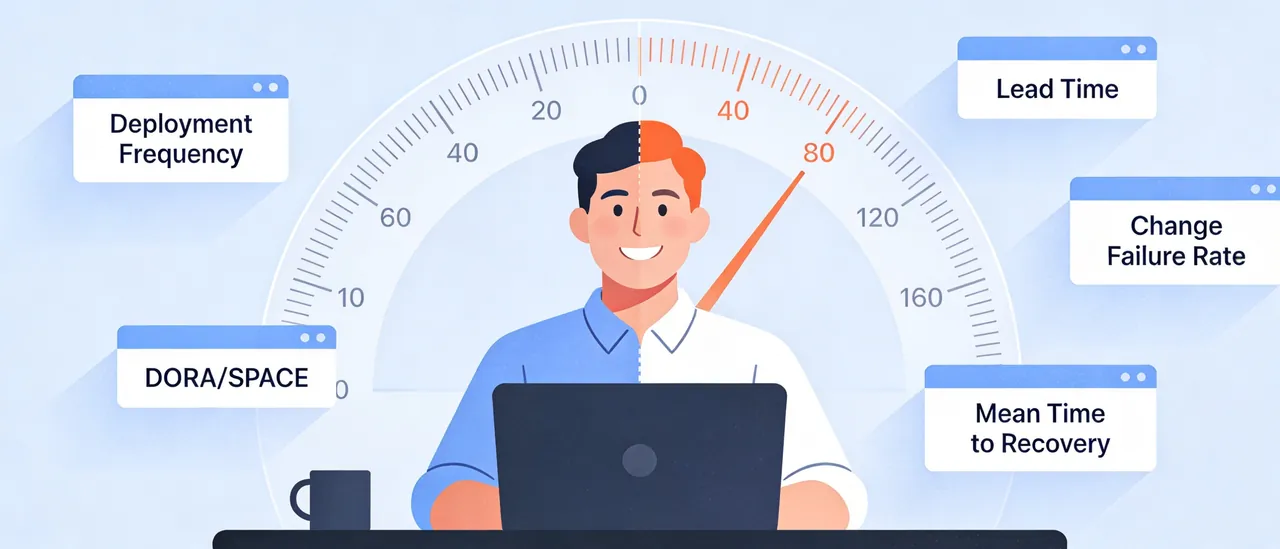
- Tie investment to the ROI scorecard—DORA metrics, business outcomes, fully-loaded cost (see the ROI post). No scorecard, no scaling.
Layer 4: Accountability — who owns the number?
Governance without an owner is a document. Assign one. Borrow the FinOps model that matured around cloud spend: a named owner, monthly cost reviews, and the team that spends being the team that sees the bill. When engineering managers watch their own AI line item the way they watch their cloud bill, behavior changes within a sprint.
How to Stop Experiments Becoming Budget Leaks
Layer the framework into a simple lifecycle every AI initiative passes through:
- Propose. One question, a hard budget cap, a kill date, an owner. Labeled "experiment."
- Run, bounded. Guardrails on by default. Spend alerts live. Nobody can exceed the cap without explicit re-approval.
- Decide. At the kill date, one of three outcomes—promote (evidence cleared the ROI bar → becomes a funded investment), iterate (promising, re-cap and re-time-box), or kill (turn it off completely, including the subscription).
- Review. Promoted investments enter the monthly FinOps review against their scorecard. Investments that stop performing get demoted or killed, too.
The magic is in step 3's default. If no decision is made, the default is kill, not continue. That one inversion—from "keeps running unless someone stops it" to "stops unless someone justifies it"—eliminates the most expensive category of waste there is.
The Balance: Govern Cost Without Killing Curiosity
A warning, because it's easy to over-correct. The goal of cost governance is not to minimize AI spend—it's to maximize AI return. An organization so locked down that no one can run an experiment will lose to one that experiments cheaply and kills fast.
The consensus across 2026's post-mortems is blunt: the thing separating the winners from the 73% isn't model quality or bigger budgets. It's governance, measurement infrastructure, and the discipline to move from pilot to production deliberately. Cheap, bounded, well-measured experimentation is the engine. Governance is the steering and the brakes—not an off switch.
The Bottom Line
AI spend becomes waste at the exact moment it stops being measured and bounded. To keep it on the value side of the line:
- Get visibility first. One dashboard, every cost tagged to a team and an outcome.
- Make "bounded" the default. Budget caps, rate limits, cheaper-model defaults, caching—on by default, unbounded only by sign-off.
- Separate experiments from investments, and give every experiment a hard cap and a kill date.
- Default to kill. Initiatives continue only when evidence justifies them, never by inertia.
- Name an owner and run AI spend through a monthly FinOps review like any other operating cost.
The companies burning millions aren't doing it because AI is expensive. They're doing it because nobody decided when to stop. Decide first—then spend.
Related reading: Open-source vs paid AI tools—which is actually more cost-effective?
Sources:
- MIT, study on enterprise AI pilot P&L impact (2025)
- S&P Global, enterprise AI project abandonment data (2025)
- IBM, AI initiative ROI and scaling research (2026)
- Enterprise AI spending forecasts and cost-overrun reporting, 2026
Related Reading:
Enjoying this article?
Get posts like this in your inbox. No spam, unsubscribe anytime.