India's Tech Paradox: Data Superpower or Digital Colony?
A realistic look at India's place in the global AI race — data sovereignty, cloud dependency, and the path to genuine tech independence.
A realistic assessment of where India stands in the global AI and infrastructure race
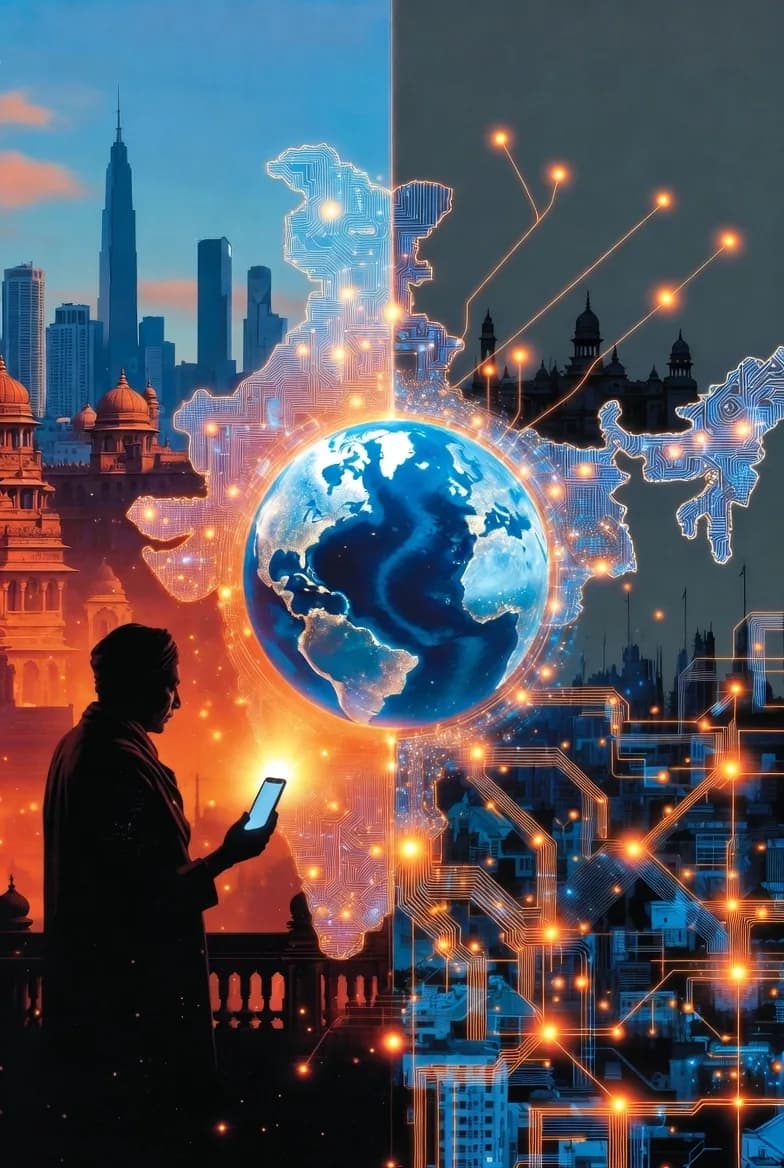
The global tech order is fracturing. As the United States and China battle for chip supremacy, a quieter but equally consequential war is being fought over something less visible: data sovereignty and AI infrastructure. Nations are racing to ensure they don't become what analysts are now calling "digital colonies" — countries that generate valuable data but lack the infrastructure to process, own, or monetize it.
Where does India fit in this new world order? The answer is uncomfortable, hopeful, and complicated — all at once.
The Cotton Trade Analogy
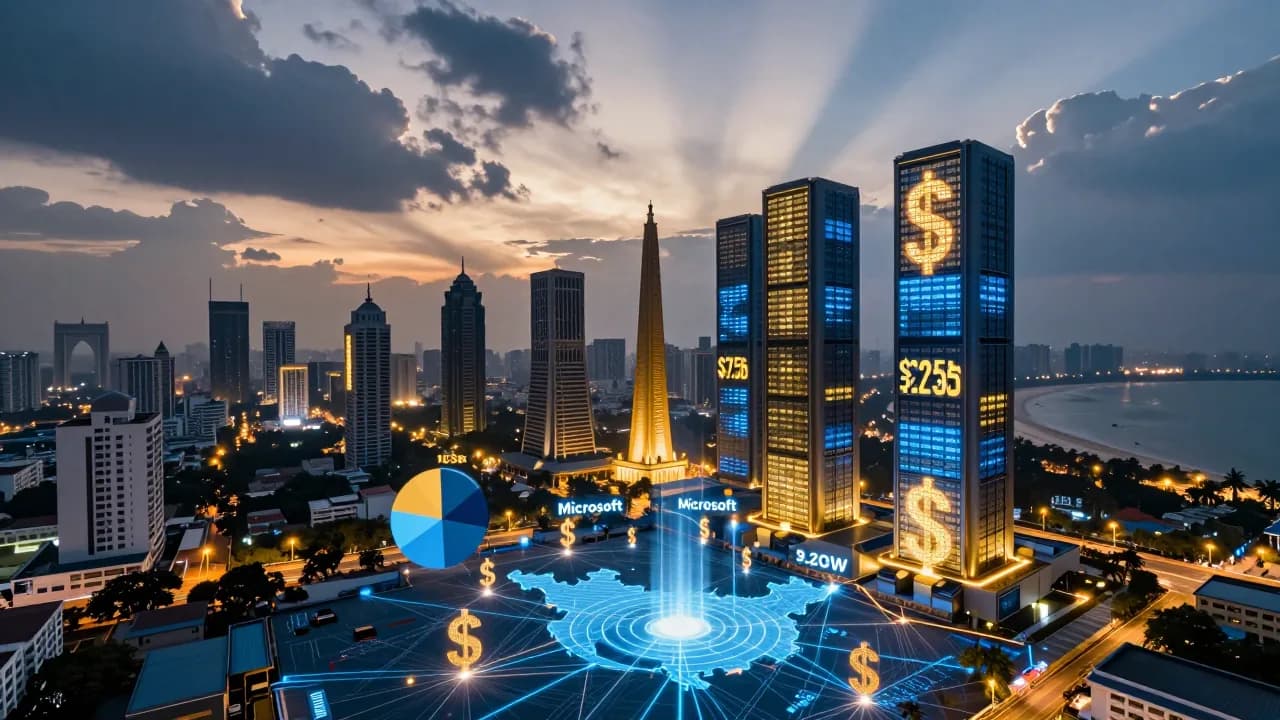
Here's a statistic that should make every Indian technologist pause: India produces approximately 20% of the world's data but holds only 3% of global data center capacity.
Let that sink in.
When 1.4 billion Indians use WhatsApp, scroll through Instagram, ask ChatGPT questions, or shop on Amazon, they generate an ocean of data. But that data doesn't stay in India. It flows to servers in Virginia, Oregon, and Dublin. There, it gets processed, refined into AI models, and sold back to Indians as subscription services.
This is the modern equivalent of the colonial cotton trade. India once exported raw cotton to British mills, only to buy back expensive finished textiles. Today, we export raw data to American hyperscalers and buy back expensive AI services.
The parallels are striking:
- Raw material flows out — Data, talent, and labor
- Finished products flow back in — AI models, cloud services, SaaS platforms
- Value capture happens elsewhere — The profits, the IP, the strategic advantage
The Three Camps of Global Tech
To understand India's position, we need to understand the new global tech geography. The world is splitting into distinct camps:
Camp 1: The Superpowers (US and China)
These nations own the full stack — chips, cloud, models, and platforms. They set the rules. When the US banned Huawei or restricted chip exports to China, it demonstrated what infrastructure control really means. China, anticipating such moves, spent decades building domestic alternatives. Today, despite sanctions, China can survive and even thrive in isolation.
Camp 2: The Buyers (Gulf States)
The UAE and Saudi Arabia can't match American innovation or Chinese manufacturing, but they have something equally powerful: capital. They're writing $100 billion checks to OpenAI and NVIDIA, building massive data centers, and demanding technology transfer as a condition of partnership. They're buying their way out of dependency.
Camp 3: The Data Colonies (India, Brazil, Indonesia)
These nations have massive populations generating enormous data, but they lack the infrastructure to own it. They're rich in raw material, poor in processing capacity. Their tech economies run on American clouds. If the US ever "turned off the tap," these economies would face immediate crisis.
India sits squarely in Camp 3.
What India Has (The Hopeful Part)
Before we spiral into pessimism, let's acknowledge India's genuine strengths. They're significant, and they provide a foundation for change.
1. Scale That Cannot Be Ignored
India has 1.4 billion people, over 700 million internet users, and the world's youngest population. This isn't just a market — it's a data generation engine that every global tech company needs access to. Scale provides leverage, even if India hasn't fully learned to use it yet.
2. The World's Back Office
The nearshoring trend that's hitting American middle management? It benefits India. When US companies cut local headcount and move operations to cheaper locations, India (along with Latin America) absorbs that work. India's IT services sector remains globally dominant. TCS, Infosys, Wipro, and HCLTech collectively employ millions and generate over $200 billion in annual revenue.
3. Digital Public Infrastructure That Actually Works
India's Unified Payments Interface (UPI) processes over 10 billion transactions monthly. It's genuinely world-class — so good that other countries are adopting it. Aadhaar, despite privacy concerns, has created a digital identity layer that enables financial inclusion at unprecedented scale. The India Stack (Aadhaar + UPI + DigiLocker + eSign) represents real innovation that India owns and controls.
4. A Growing Domestic AI Ecosystem
The past two years have seen serious attempts to build India-first AI:
- Krutrim (Ola's Bhavish Aggarwal) raised $50 million to build Indian language models
- Sarvam AI is focused on voice-first, Indian-language AI
- Tech Mahindra's Project Indus aims at multilingual Indian LLMs
- Reliance and Tata are making significant AI investments
These efforts are nascent, but they exist.
5. Government Awareness (Finally)
The India AI Mission, announced in 2024, allocated ₹10,000 crore for AI compute infrastructure. The semiconductor policy offers incentives for chip fabrication. Data localization requirements (though inconsistently enforced) show recognition of the sovereignty problem.
What India Lacks (The Uncomfortable Part)
Strengths acknowledged, let's be honest about the gaps. They're substantial.
1. No Hyperscale Cloud Infrastructure
India has no AWS. No Azure. No Google Cloud equivalent. The closest domestic players (Jio, Yotta, CtrlS) are orders of magnitude smaller than American hyperscalers. When Indian startups build products, they build on American infrastructure. When Indian enterprises digitize, they do it on American clouds.
This isn't just a business problem — it's a sovereignty problem. Data stored on US servers is subject to US law, including the CLOUD Act, which allows American authorities to access data stored by US companies anywhere in the world.
2. No Semiconductor Manufacturing
India doesn't make chips. Period.
The Micron plant in Gujarat (a packaging and testing facility, not fabrication) and the Tata-PSMC fab are steps forward, but they're baby steps. Cutting-edge chip fabrication requires decades of accumulated expertise, hundreds of billions in investment, and supply chains that don't currently exist in India.
Taiwan, South Korea, and increasingly the US and China have this capability. India is years — possibly decades — behind.
3. The Talent Export Model
India produces exceptional engineers. IITs are globally recognized. But where do the best graduates go? Increasingly, they join American companies — either by emigrating or by working remotely for US employers paying US-adjacent salaries.
The value creation happens elsewhere. The exceptional Indian engineer working at Google or OpenAI contributes to American AI leadership, not Indian.
This isn't a criticism of individual choices — it's a systemic observation. India trains talent, America captures value.
4. No Foundational AI Model of Global Relevance
Despite the emerging ecosystem, India hasn't produced a model that matters globally. No Indian equivalent of GPT-4, Claude, or Gemini. No Indian Mistral. The models being built are focused on Indian languages (important, but limited in global strategic value) and are generations behind the frontier.
5. Regulatory Inconsistency
India's data protection framework remains a work in progress. The Digital Personal Data Protection Act (2023) was a start, but implementation has been slow. Data localization requirements exist on paper but are inconsistently enforced. Foreign companies operate with significant flexibility.
Compare this to Europe's GDPR (strictly enforced, globally influential) or China's data regime (absolute control). India's approach is neither fish nor fowl.
The Dependency Problem
Let's make the dependency concrete with a thought experiment.
Imagine tomorrow, due to some geopolitical crisis, AWS, Azure, and Google Cloud were forced to suspend services to India. What would happen?
- Payments infrastructure — UPI runs on multiple clouds, but significant components depend on foreign providers. Disruption would be immediate.
- Startups — The vast majority of Indian startups run entirely on US clouds. Most would cease functioning within hours.
- Enterprise IT — Banks, insurers, and large corporations increasingly run on hybrid clouds with significant US components.
- Government services — Many e-governance platforms have cloud dependencies.
This scenario is unlikely, but its possibility reveals the depth of dependency. India's digital economy runs on infrastructure it doesn't control.
The Gulf Comparison: What Money Can Buy
The contrast with the Gulf states is instructive.
Saudi Arabia and the UAE are also dependent on foreign tech, but they're solving it differently. Their approach is simple: use oil wealth to buy sovereignty.
They're:
- Building massive data centers with guaranteed power supply
- Demanding technology transfer as a condition for market access
- Investing directly in American AI companies (Saudi's investment in OpenAI)
- Creating regulatory environments that force companies to localize
When you have a sovereign wealth fund with $700 billion (Abu Dhabi's ADIA) or $930 billion (Saudi's PIF), you can write checks that change behavior.
India doesn't have this luxury. With a GDP per capita of roughly $2,500 (compared to UAE's $50,000), India can't buy its way out. It has to build its way out.
What Needs to Change: A Realistic Roadmap
Given India's constraints — limited capital, competing priorities (healthcare, education, poverty), and a democratic system that makes rapid, top-down change difficult — what's actually achievable?
Near-Term (2025-2027): Pragmatic Steps
1. Enforce existing data localization requirements
The rules exist. Enforce them. Make companies serving Indian users store sensitive data in India. This alone would force infrastructure investment.
2. Prioritize cloud infrastructure as strategic
Treat domestic cloud capacity like defense infrastructure. Provide incentives, preferential government contracts, and regulatory support for Indian cloud providers.
3. Focus AI efforts on practical applications
India may never compete with OpenAI on frontier models. But India can lead in applied AI for Indian problems: agriculture, healthcare delivery, vernacular languages, government services. This is achievable and valuable.
4. Stem the talent drain strategically
India can't (and shouldn't try to) prevent emigration. But it can create conditions that keep some fraction of top talent. ESOPs regulation reform, startup-friendly taxation, world-class research institutions with competitive compensation — these help.
Medium-Term (2027-2032): Building Foundations
1. Semiconductor assembly and packaging
Chip fabrication may be decades away, but assembly, testing, and packaging (ATP) is achievable sooner. This builds supply chain expertise and provides a stepping stone.
2. Develop one globally relevant AI capability
Pick a domain where India can genuinely lead — perhaps multilingual AI, AI for low-resource settings, or AI for specific verticals like pharmaceuticals — and invest disproportionately.
3. Regional data infrastructure leadership
If India can't compete globally with US hyperscalers, it can be the data infrastructure hub for South Asia, Southeast Asia, and parts of Africa. A regional strategy may be more achievable than a global one.
Long-Term (2032+): Genuine Sovereignty
1. Domestic chip fabrication
This requires sustained investment over decades, regardless of political cycles. It's expensive, uncertain, and necessary.
2. Full-stack AI capability
From chips to models to applications, controlled end-to-end. This is the definition of AI sovereignty.
3. Setting standards, not following them
True tech powers don't just comply with regulations — they set them. India's long-term goal should be participating in shaping global tech governance, not just adapting to rules written elsewhere.
The 2026 Reality
Let's be specific about where India will likely stand in 2026:
The Good:
- IT services will continue growing, benefiting from nearshoring trends
- Digital public infrastructure will expand and possibly be exported
- Domestic AI players will mature, with some reaching meaningful scale in Indian markets
- Data center capacity will grow significantly (though still a fraction of global capacity)
The Challenging:
- India will remain dependent on US cloud infrastructure for critical services
- No Indian AI model will achieve global relevance
- Semiconductor manufacturing will still be in early stages
- Top talent will continue to emigrate at high rates
The Unknown:
- How geopolitical tensions between US and China affect India's positioning
- Whether government AI investments translate to real capability
- Whether Indian enterprise shifts spending toward domestic providers
Conclusion: Navigating the In-Between
India's position in the global tech order is neither catastrophic nor comfortable. It's somewhere in between — a country with genuine strengths and serious vulnerabilities, real potential and substantial constraints.
The "data colony" framing is provocative, perhaps even harsh. But it contains a kernel of truth that India must confront. Generating data is not the same as owning it. Training talent is not the same as retaining it. Having a large market is not the same as controlling the infrastructure that serves it.
The next decade will determine whether India transitions from data source to data power, from talent producer to talent beneficiary, from infrastructure renter to infrastructure owner.
This transition isn't guaranteed. It requires sustained investment, political will beyond electoral cycles, strategic clarity, and a degree of ruthless prioritization that democracies often struggle with.
But it's possible. India has navigated seemingly impossible transitions before — from food insecurity to self-sufficiency, from license raj to liberalization, from telecom backwater to mobile-first economy.
The question isn't whether India can make this transition. The question is whether India will choose to.
Related Reading:
- India's Talent Migration: What the Numbers Tell Us
- Indian IT and AI: Layoffs, Hiring and the Reskilling Gap
- The SaaSpocalypse's Silver Lining for Indian IT
The global tech order is being rewritten. India can be an author of this new order, or a footnote in someone else's story. The choice is still ours to make — but the window for making it won't stay open forever.
Enjoying this article?
Get posts like this in your inbox. No spam, unsubscribe anytime.