The Programming Revolution: Claude Code Writes Itself
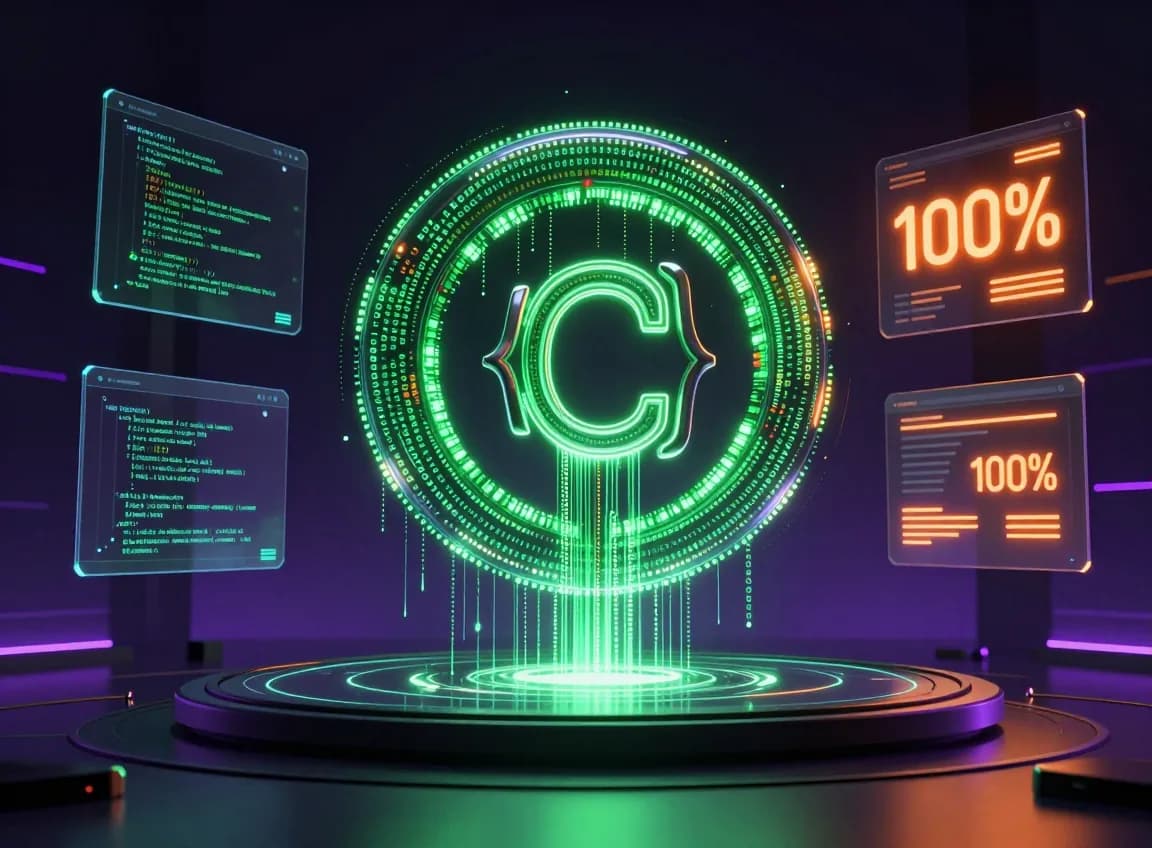
100% of Claude Code's recent codebase was written by Claude Code itself. From Shopify to Google, leaders are stunned. Why you may already be behind.
The Programming Revolution: Claude Code Writes Itself
Update (June 2026): This piece captures the Claude Opus 4.5 moment of late 2025. Since then the model has advanced through 4.6 and 4.7 to Claude Opus 4.8 (released May 28, 2026), now the top-ranked coding model—leading SWE-bench Verified at 88.6%. The "deprecated worldview" warning below has, if anything, aged well. But the half-year since has also surfaced the other side of this story: agentic coding's very real cost problem, and the gap between code that feels fast and delivery that actually is. Read this for the capability; read those for the economics.
"I feel behind as a programmer."
When Andrej Karpathy—former Tesla AI Director and OpenAI founding member—posts this to 15 million viewers, the tech world pays attention.
But it's not just Karpathy. Shopify's CEO is "stunned." Google's former CEO says everything he did in his 20s has been "completely automated." And the Claude Code team just revealed something that sounds like science fiction:
100% of Claude Code's code in the last 30 days was written by Claude Code itself.
Welcome to the programming revolution. And if you haven't been paying attention for the last 30 days, according to Karpathy himself, you already have a "deprecated worldview."
The Karpathy Wake-Up Call
Andrej Karpathy's viral post wasn't just another AI hype thread. It was a confession from one of the most respected names in AI:
"Traditional programming is being dramatically refactored. Less code is being written and reviewed by humans, yet incredible apps are still being built."
His observations cut to the heart of what's changing:
- New abstractions are emerging: Agents, sub-agents, prompts, contexts, MCP, LSPs
- The productivity multiplier is real: Developers could be "10x more powerful" using available tools
- The gap is widening: Those who adapt are pulling ahead; those who don't are falling behind
His conclusion? "Roll up your sleeves to not fall behind."
But what does "not falling behind" actually look like in practice?
Inside Claude Code: The Numbers Are Insane
Boris Churnney, Claude Code's Team Lead, pulled back the curtain on how the team actually works. The numbers are staggering:
30 Days of AI-Written Code
| Metric | Value |
|---|---|
| PRs Merged | 259 |
| Commits | 497 |
| Lines Added | 40,000+ |
| Lines Removed | 38,000+ |
| Written by Claude Code | 100% |
This isn't a gimmick or a demo. This is production software, actively developed, reviewed, and shipped—by an AI.
How Long Does Claude Run?
"Claude runs autonomously for minutes, hours, and days at a time."
Not minutes. Days.
One example Churnney shared: A colleague encountered a memory leak. Instead of debugging it manually, they simply told Claude Code to "go look."
The result? Claude one-shotted a complete PR fix.
The most telling admission? Boris sometimes forgets Claude can do tasks and starts working on them manually. The tool has become so capable that even its own team underestimates it.
The Development Velocity Is Unprecedented
The Claude Code team has achieved a development velocity that would've seemed impossible a year ago:
Team Metrics
- 5 releases per engineer per day
- First code review always done by Claude Code
- Test suite ~100% written by Claude Code
- 10+ prototypes tested for new features
The New Workflow
The human role has fundamentally shifted:
Human (Overseer)
    ↓
Agent (Claude Code)
    ↓
Sub-agents (Specialized tasks)
Humans define specifications and provide taste. Claude handles the implementation, testing, and initial review. This isn't human-in-the-loop anymore—it's AI-in-the-loop with human oversight.
Industry Leaders Are Stunned
Toby Lutke, Shopify CEO
"Opus 4.5 feels very different for coding than anything else that came before. Kind of stunning what it can do."
When a CEO whose company processes billions in e-commerce calls a coding tool "stunning," that's not marketing speak—that's genuine surprise.
Igor Babushkin, xAI Founder
Called Opus 4.5 "pretty good"—which prompted Karpathy's sharp response:
"People who aren't keeping up, even over the last 30 days, already have a deprecated worldview."
Thirty days. That's how fast the landscape is shifting.
Eric Schmidt, Former Google CEO
"Everything I did in my 20s has now been completely automated."
Schmidt described watching AI generate entire programs with classes and interactions, then delivered the key insight:
"Each and every one of you has a supercomputer and a super programmer in your pocket."
The tools that once required teams of engineers are now accessible to individuals.
The Confession That Changes Everything
Peter Steinberger, a respected developer, made an admission that would've been heretical a year ago:
"I ship code I never read."
Let that sink in. A professional developer, shipping production code, without reading most of it.
His workflow:
- Watches the stream of changes
- Reviews key architectural parts
- Understands component structure and system design
- Doesn't read most of the actual code
His conclusion? "That's usually all that's needed."
This isn't laziness—it's a fundamental shift in what developers actually need to understand. The abstraction layer has moved up. You don't need to read every line; you need to understand the system.
"We're 6-12 Months Away From Solving Software"
McKay Wrigley, who teaches AI coding, made perhaps the boldest prediction:
"We're 6-12 months away from solving software."
His evidence? Building three complete versions of an application in a few hours—work that would've taken 1-2 weeks just a year ago.
"It's getting weird."
"Weird" might be an understatement. We're watching the compression of software development timelines by an order of magnitude, in real-time.
What Actually Matters Now
If AI can write code faster and often better than humans, what's left for humans to do?
The answer, according to everyone paying attention: taste.
The Human Differentiators
As intelligence and software creation become "essentially free and infinite," these become the only things that matter:
- User Experience
- What should the software feel like?
- What problems are actually worth solving?
- Design Aesthetics
- Visual design that resonates
- Interaction patterns that delight
- Specification Quality
- Clearly defining what you want
- Understanding the problem deeply enough to describe it
- Signal vs. Noise
- Knowing what to build vs. what not to build
- Taste in choosing the right solution
The New Job Description
Programming is transforming from:
- ❌ Writing code
- ❌ Debugging line by line
- ❌ Memorizing syntax
To:
- ✅ Orchestrating AI agents
- ✅ Defining specifications
- ✅ Exercising judgment and taste
- ✅ Understanding systems at a high level
The 30-Day Worldview Problem
Karpathy's comment about "deprecated worldviews" isn't hyperbole. The tools available today are meaningfully different from those available a month ago.
Consider:
- Late November 2025: Claude Opus 4.5 didn't exist
- Six months later (mid-2026): Opus has already passed through 4.6 and 4.7 to 4.8—each a meaningful step on coding benchmarks
- 30 days from now: ???
If you're forming opinions about AI coding based on experiences from three months ago, you're operating on outdated information. The landscape shifts faster than most people's update cycles—this very post needed updating within months.
How to Not Fall Behind
Based on what the leaders are doing, here's the practical playbook:
1. Use the Tools Daily
Don't just read about Claude Code—use it. The gap between reading about capabilities and experiencing them is enormous.
2. Learn to Specify, Not Just Code
Your value increasingly comes from clearly defining what should be built, not how to build it. Practice writing precise specifications. Prompt engineering is the foundational skill here.
3. Develop Your Taste
Cultivate opinions about:
- What makes good UX
- What problems are worth solving
- What "quality" means in your domain
4. Embrace the New Abstraction
Just as you don't write assembly code, you may not need to write much application code. Learn to work at the agent orchestration level.
5. Stay Current—Weekly, Not Yearly
The 30-day worldview problem is real. Build habits that keep you updated on actual capabilities, not just announcements.
The Bottom Line
We're witnessing a phase transition in software development. The evidence is overwhelming:
- Claude Code writes itself (100% in the last 30 days)
- Industry leaders are stunned (Shopify, Google, xAI)
- Velocity has exploded (5 releases per engineer per day)
- Developers ship unread code (and it works)
- The timeline is compressing (weeks → hours)
The question isn't whether this transformation is happening—it's whether you're adapting to it.
As Karpathy warned: roll up your sleeves, or fall behind.
The programming revolution isn't coming. It's here.
Key Takeaways
- 100% of Claude Code's recent code was written by Claude Code itself
- Claude Opus 4.5 represents a step change that's surprising even industry veterans
- The human role is shifting from writing code to defining specifications
- Taste becomes the differentiator when code generation is essentially free
- 30 days is enough to have a "deprecated worldview" in this space
- The practical response: Use the tools, develop taste, learn to orchestrate
The future of programming isn't about writing code—it's about knowing what code should exist. Are you ready?
Related Reading:
Enjoying this article?
Get posts like this in your inbox. No spam, unsubscribe anytime.