AMD's Secret Weapon Could Make Graphics Cards Obsolete
While Nvidia's RTX 5090s catch fire and Intel demands 700W, AMD is quietly developing LPDDR6 technology that could eliminate the need for discrete GPUs for most users.
Here's a bold prediction: in a few years, most of us won't need to buy a separate graphics card anymore.
I know, I know—PC gamers are already sharpening their pitchforks. But hear me out.
While everyone's freaking out about Nvidia's RTX 5090s literally catching fire (yes, really) and Intel announcing CPUs that need more power than your washing machine, AMD just quietly dropped a hint about technology that could change everything.
They're putting something called LPDDR6 memory in their next-gen processors. And if you think that sounds boring, you're not alone—but you're also wrong.
The Problem With Computers Today
Right now, if you want to game on a PC or do anything graphics-intensive, you need two chips: a CPU (the brain) and a GPU (the graphics processor). The GPU alone can cost anywhere from $400 to $2,000+. For a lot of people, it's the single most expensive part of their computer.
But here's the thing: most people don't actually need that much power.
According to Steam (the biggest PC gaming platform), the majority of gamers are still playing at 1080p resolution. They're playing Fortnite, CS2, League of Legends—games that don't need a $1,500 graphics card to run smoothly.
So why do we keep buying them? Because integrated graphics (the GPU built into your processor) have always sucked. They work fine for YouTube and browsing, but the moment you try to play a game or edit a video, they choke.
The reason? Memory. Integrated graphics share your computer's regular RAM, and that RAM isn't fast enough for graphics work. It's like trying to drink a milkshake through a coffee stirrer—technically possible, but frustratingly slow.
AMD's Solution: Better Memory
This is where LPDDR6 comes in.
Without getting too technical, LPDDR6 is a new type of memory that's 80% faster than what we have now. It also has wider "pipes" for data to flow through—50% more data per channel.
What does that mean in practice? It means integrated graphics could finally perform like real graphics cards.
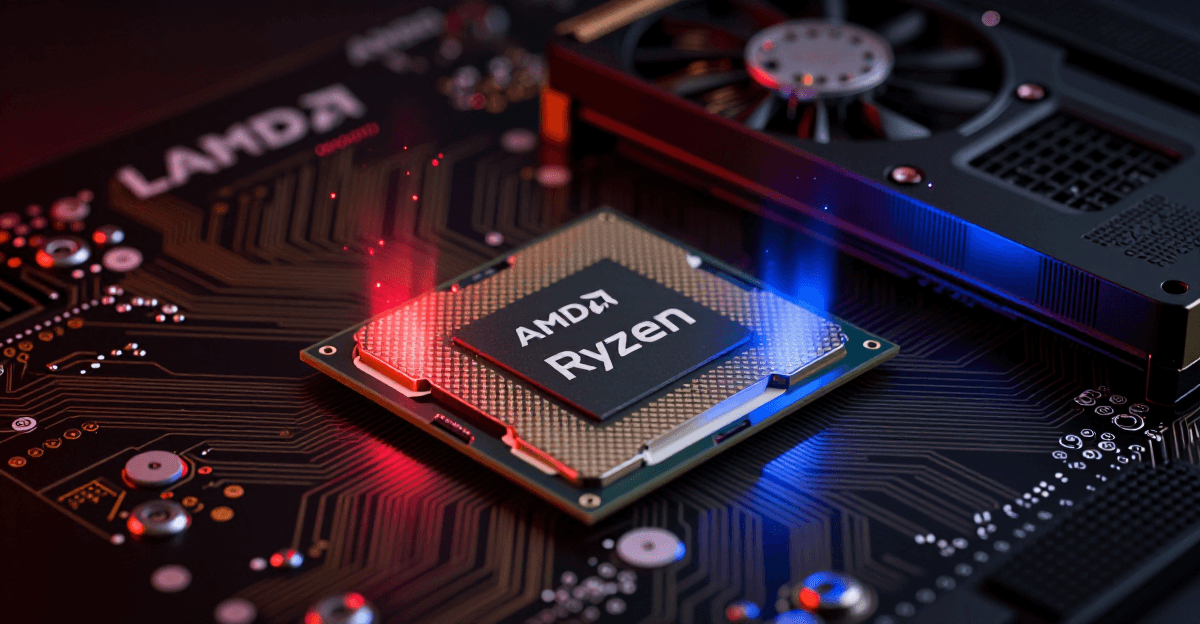
AMD's next-gen Ryzen Max processors (code-named "Medusa Halo") are rumored to include:
- 24 CPU cores (for all your regular tasks)
- Next-gen graphics (RDNA 5 architecture)
- This new LPDDR6 memory
If the rumors are true, these chips could handle 1080p gaming, video editing, and even some AI tasks—all without needing a separate graphics card.
Why This Matters More Than You Think
For your wallet: No $500-1000 graphics card purchase. That's real money.
For the planet: Separate graphics cards can pull 200-400 watts of power. That's like running a small space heater inside your PC. Less power = lower electric bills and less environmental impact.
For laptop users: This is huge. Laptops with discrete graphics are thick, heavy, and have terrible battery life. Integrated graphics that actually perform well? That's the dream.
For casual users: If you're not chasing 4K/144fps gaming, why are you spending money on a monster GPU? You wouldn't buy a semi-truck to commute to work.
The Competition Is Stuck
Meanwhile, what are Nvidia and Intel doing?
Nvidia: Their RTX 5090 is catching fire. Literally. Multiple users have recorded their cards sparking and burning. MSI is so worried they added a new warning system to their software. This is not a good look.
Intel: Their next-gen chips are rumored to pull 700+ watts at full load. For context, that's more than most people's entire computers use today. You'll need a dedicated electrical circuit just for your PC.
Both companies are chasing raw performance at any cost. AMD seems to be asking a better question: What do most people actually need?
The Catch
Here's where I'll be honest: this won't replace high-end graphics cards for everyone.
If you're playing at 4K resolution, doing professional 3D rendering, or training AI models, you'll still want a dedicated GPU. Integrated graphics won't touch that level of performance—at least not yet.
But for the average person? The student editing videos for class? The casual gamer playing on a 1080p monitor? The office worker doing presentations? You probably don't need a graphics card at all.
When Can We Get This?
The bad news: not until late 2027, based on current rumors.
The good news: it's coming from AMD, a company that has a track record of disrupting markets when everyone thinks it's impossible. They did it with their Ryzen processors (beating Intel after years of dominance), and they could do it again.
My Hot Take
The graphics card market is overdue for disruption. We've normalized spending $1,000+ on a single component that most people don't fully utilize. We've accepted graphics cards that could literally burn your house down. We've shrugged at power consumption that would make a Bitcoin miner blush.
AMD's LPDDR6 strategy isn't flashy. It won't break benchmark records. But it might do something better: make graphics cards optional for most people.
And honestly? That's more exciting than another 10% performance bump on a $2,000 GPU.
Will I be ditching my graphics card in 2027? Probably not—I'm a tech nerd who likes having more power than I need. But would I recommend integrated graphics to my family and friends? If AMD delivers on this? Absolutely.
The future of computing might not be bigger and faster. It might just be good enough—and that's perfectly fine.
What do you think? Are you ready to go graphics card-free? Or am I completely off base? Drop a comment below—I'd love to hear your thoughts.
Note: All information based on industry leaks and rumors. AMD hasn't officially confirmed LPDDR6 in Ryzen Max chips yet. But when there's this much smoke, there's usually fire. (Unlike Nvidia's GPUs. Those fires are very real.)
Enjoying this article?
Get posts like this in your inbox. No spam, unsubscribe anytime.